

What ERG leaders are asking right now
- October 2, 2026 at 3:40 PM
- 0 replies
- 36 views

Recently, program leaders from across industries joined Benevity product experts to talk about employee resource group (ERG) engagement: what's working, what isn't and what they're still working out. Some of the organizations run established global programs with chapters on several continents. Others are just getting started or still evaluating whether to launch.
These are the five takeaways that stood out.
🌐 Focus on your most active 20%
Most online communities follow a familiar pattern: about 20% of members drive about 80% of the engagement. It's known as the 80/20 rule, or the Pareto principle, and it applies to employee groups too.
That changes the goal. You don't need every member to post, comment and attend every event. What you need is a strong core of active members who create content and energy for everyone else.
It's also worth looking again at your "passive" members. They're logging in to Benevity Employee Groups, reading posts and following along. They may not have been asked the right question yet, or they haven't found something they want to share. Passive members are still part of your community. Most of them just haven't contributed yet.
In Employee Groups, the administrator dashboard shows the split between active and passive participants at a glance. It also shows your top contributors, who are often good candidates for champion programs or future ERG leadership.
🌐 Help registered employees take the next step
One of the most common challenges we heard was the gap between registering and participating.
A few steps can help:
- Find who's in the gap. Employee Groups includes preset reports that list users who haven't activated their accounts and users who haven't joined a group.
- Send a short, personal nudge. A note such as "We noticed you haven't finished setting up your account — come join us" or "You haven't joined a group yet. Here's what you might be missing" can move people forward.
- Give them a reason to come back. A timely event or activity gives new members something to do once they arrive.
🌐 Treat group leaders as your best asset
ERG leaders have already raised their hands, and they care about the communities they support. Programs that treat group leaders as the catalyst for everyone else tend to see more momentum.
Several practices came up:
- Create a dedicated group leaders hub. A shared space where leaders from every group can swap ideas, compare event plans and find ways to collaborate across groups.
- Encourage each group to set goals. Clear goals give leaders guardrails when they plan content and events. One group set two goals for the year: building stronger allies and deepening a community partnership.
- Make small, specific asks. Engaged members respond better to "Can you greet guests at our event?" than to a general call for volunteers.
- Set simple expectations. For example, post at least once a month, host one event a year and share a quarterly recap. Groups can adjust these based on their own rhythm, since some are busiest around heritage months and quieter the rest of the year.
🌐 Model the engagement you want to see
ERG leaders usually do this work alongside their day jobs. Several program leaders were candid that polls and activities sometimes take off and sometimes fall flat. One team shared that they plan to create engagement content at the program level so group leaders can see what good looks like and follow the example.
It's a practical idea. When leaders don't know where to start, a ready-made example gives them somewhere to begin. Program admins can also share their priorities for the quarter so groups can connect their activity to bigger company initiatives.
Benevity offers resources for this too. The Goodness Calendar highlights heritage months, holidays and awareness days throughout the year. It links to content kits with ready-to-use quizzes, questions and images, plus evergreen topics such as leadership and allyship.
Another idea from the discussion was to spotlight your most engaged members. Recognizing people publicly thanks them for their effort and shows others what participation looks like.
🌐 Connect groups to giving and volunteering
ERGs and giving and volunteering programs often work together already. Employee Groups makes that connection visible. Administrators can add Donate, Volunteer and Challenges to the navigation, so members can move between programs easily. Group leaders can add cause and volunteering opportunities to their group page and share them to the group feed.
Program leaders also asked about visibility across many groups. A member in several ERGs wants to see everything happening in one place. The events calendar shows upcoming events across all public groups, and it can be embedded on an intranet page such as SharePoint or Confluence. Group leaders get a separate planning calendar so they can avoid scheduling conflicts. Banners in Employee Groups can promote a spotlight month or send members to a specific volunteering event.
After events, built-in surveys help leaders collect feedback, and pre-event surveys can gather what they need from participants in advance.
Groups give back what you put in 🌱
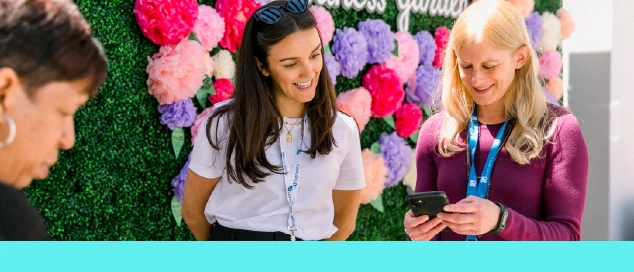
One idea from the session sums it up: employee groups are like gardens. They grow in proportion to the care they get. Showing up is the easy part for employees. The real work starts after they arrive, and it's shared between program admins and group leaders. The organizations making progress aren't waiting for engagement to appear on its own. They find their most active members, back their leaders and connect groups to the rest of the organization.
📽 Watch the full session replay here + deck attached
Want to see Employee Groups in action? Talk to your CS team.